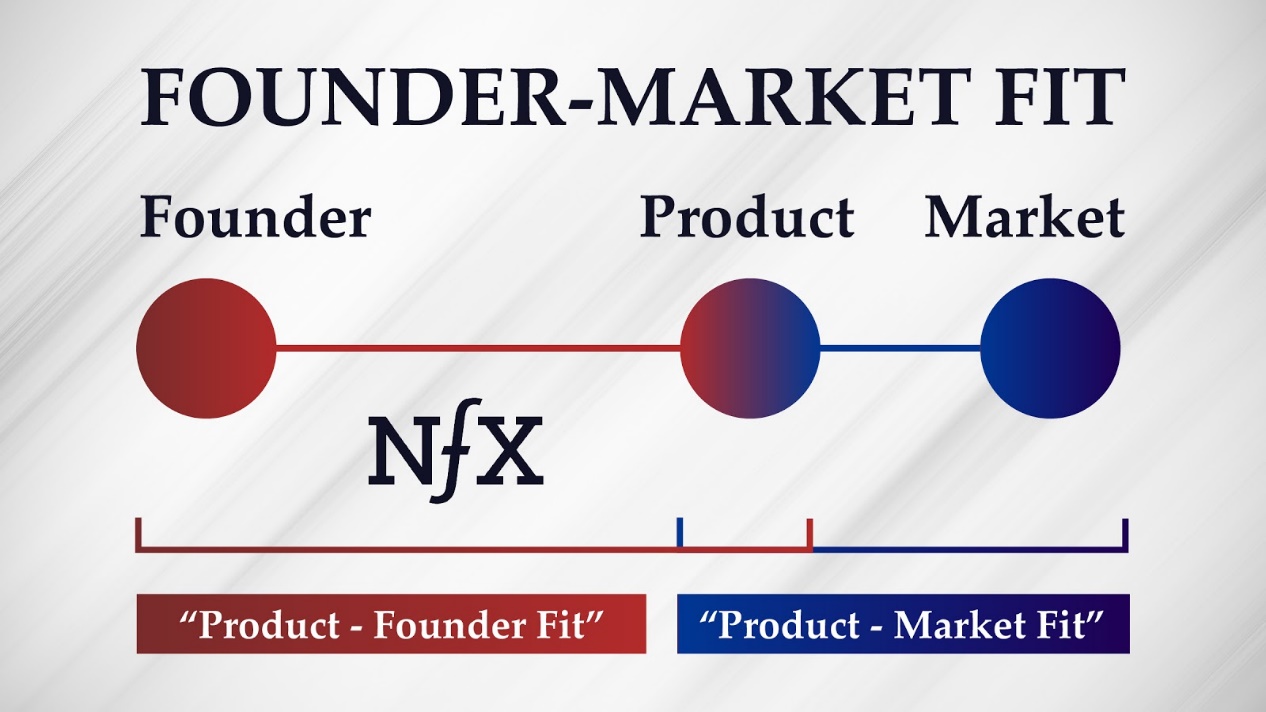
Founder Fit: Insight Driven Entrepreneurship
Paul Asel
Founding Partner at NGP Capital·
Paul Asel
Founder Fit should focus on insights, acumen and mindset rather than experience. We offer here a Founder Fit framework and guide how to use it.
Idea in Brief
- Investors focus on prior experience which misses the mark when it matters most. Half of the value of NASDAQ comes from founders with little or no prior industry experience.
- Focus on insights instead of experience as disruptive ideas come from industry outsiders.
- Founder Fit requirements change as firms grow. Founders must evolve or backfill with skills required to scale the business.
Founder Opportunity Fit Framework
Venture funds prefer to invest in industry disruptors but not necessarily in the founders that start them. Half the founding CEOs of Zero to One startups claim difficulty raising initial funding.
John Foley, founding CEO of Peloton Interactive, described raising initial funding as ‘bone crushing’ despite his pedigree as a proven entrepreneur. Y Combinator rejected Alex Solomon, founder of PagerDuty, four times before admitting him only after his firm had achieved product market fit. Anthony Caselena bootstrapped Squarespace for seven years before receiving a first round of venture funding.
Investors often focus on domain experience, which is an ally for incremental but not disruptive innovation. Up to 98% of innovation is incremental, so investors are preconditioned to focus on experience for Founder Market Fit. Yet focusing on prior experience misleads when it matters most as iconic technology companies that account for half of NASDAQ market value were founded by industry outsiders as Figure 1 shows.
Figure 1: Successful Startups Launched by Founders without Prior Industry Experience
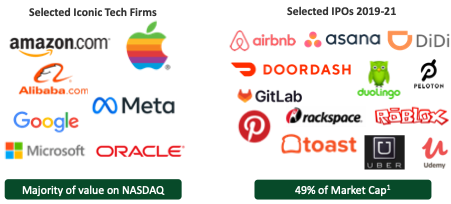
Founder Fit should focus on insight, adaptability and persistence rather than experience when assessing disruptive startups.
Startups traverse three stages from inception to public offering: (1) Get to Market: product validation with early adopters; (2) Win the Market: product market fit with target customers; and (3) Scale to Opportunity: market leadership and expansion into adjacent markets.
Founder Opportunity Fit requires insight, functional skills and entrepreneurial mindset to evolve at each stage of the company development as illustrated in Figure 2.
Figure 2: Founder Opportunity Fit across Three Startup Stages
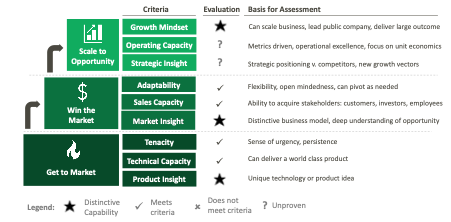
Founder insight was a key differentiator for each of the successful IPOs reviewed in my study. Insight is a key driver at all three stages of the Founder Opportunity Fit framework. Product insight that delivers a differentiated technology offers a first mover advantage at the first stage. Business model insight can accelerate adoption at the second stage. Strategic insight or process innovation can help scale the company profitably at the third stage.
Operating requirements change as the business grows. Technical and product skills are paramount at the Get to Market stage, sales and business development at the Go to Market stage, and financial and operating skills at the Scaling stage. Founders can recruit proven executives with skills required at each of these stages, yet founding CEOs who are strong promoters and savvy operators have an advantage in winning and scaling as the business grows.
Entrepreneurial mindset must evolve as a company grows. Speed and persistence are vital at the initial stages of the company requiring a sense of urgency and resilience. Adaptability to changing market conditions and competitive responses is especially important as startups search for product market fit. A growth mindset becomes paramount once the company scales.
Founder Opportunity Fit: Final Thoughts for Entrepreneurs and Investors
Investors consistently miss disruptive startups when they value experience over insight. Entrepreneurs optimize for success when they combine insight, passion and talent in a startup with the market potential to drive a large outcome.
Peter Thiel and Vinod Khosla are top investors who focus on insight rather than experience. Thiel asks the contrarian question: “What important truth do very few people agree with you on?” Khosla backs founders who espouse heretical truths. Both Thiel and Khosla were previously successful entrepreneurs who started PayPal and Sun Microsystems with no prior industry experience, so they appreciate the value of an outsider’s perspective.
Experience eventually matters when scaling a business. Founders must either scale with the business, augment the executive team for new skill requirements, or recruit new leadership as the demands of the business change. Among unicorn public tech firms, 75% of founders led the company to IPO, while 25% changed CEOs prior to their public offerings, including 29% of founding CEOs in their twenties and 23% of founding CEOs older than thirty when the companies were founded. New CEOs tended to replace technical founders at the Go to Market stage. CEO changes are also common as companies scale and prepare for IPOs.
My Founder Fit framework highlights insight and mindset as the ultimate currencies as disruptive ideas come from industry outsiders. Fortune favors the prepared mind, but relevant insight often comes from sources other than prior industry experience.
Founder Fit: Related Concepts
Founder Fit precedes Product Market Fit and is one of the first Founder Dilemmas. Bain’s Win/Scale model divides the startup process into two stages but ignores the earlier product development (Get to Market) stage.
Fortune favors the prepared mind, which may guide when to launch your startup. A Team of Teams approach identifies cofounders who fill skill gaps and align with the mission and culture. A Who Scorecard can help assess skill gaps and cofounder fit.
T Shaped Leaders combine breadth and depth. In Good to Great, Jim Collins referred to the Hedgehog and the Fox – the hedgehog knows one thing well, the fox many things. Entrepreneurs need to be adaptable, agile and do many things. But investors look for hedgehogs as entrepreneurs are disproportionally rewarded for insight and being the best at one important thing.
Great promoters are Exothermic and develop Social Capital to attract stakeholders – talent, customers, partners and funding – to accelerate the Flywheel and win markets. Alignment of Interests among stakeholders are essential in Crucible Moments to coalesce and focus externally on the problem.