The Power of Who: Startup Leadership and Talent

Paul Asel
Founding Partner at NGP Capital·
Who, not What, is a firm’s #1 asset, yet half of all startup hires fail. Having coached over 1000 startup teams, Michael Haugen discusses how to attract, assess and inspire startup talent.
Who is your number one problem. Not What. Talent is the key success factor for any startup. No other factor is close. Startups begin, and too often end, with the founding team. Founder Market Fit precedes Product Market Fit for early-stage investors.
Building a successful startup is a balancing act in managing competing demands. In the roulette of the urgent versus the important, What commands urgent attention while Who lurks in background stealth mode surfacing, often existentially, at the most inopportune times.
In Kahneman’s terms, What is typically a thinking fast question while Who requires thinking slow. In the din of daily events, founders are tempted to answer both questions at the same pace. The invoice for Who mistakes comes later but the price paid is often much higher.
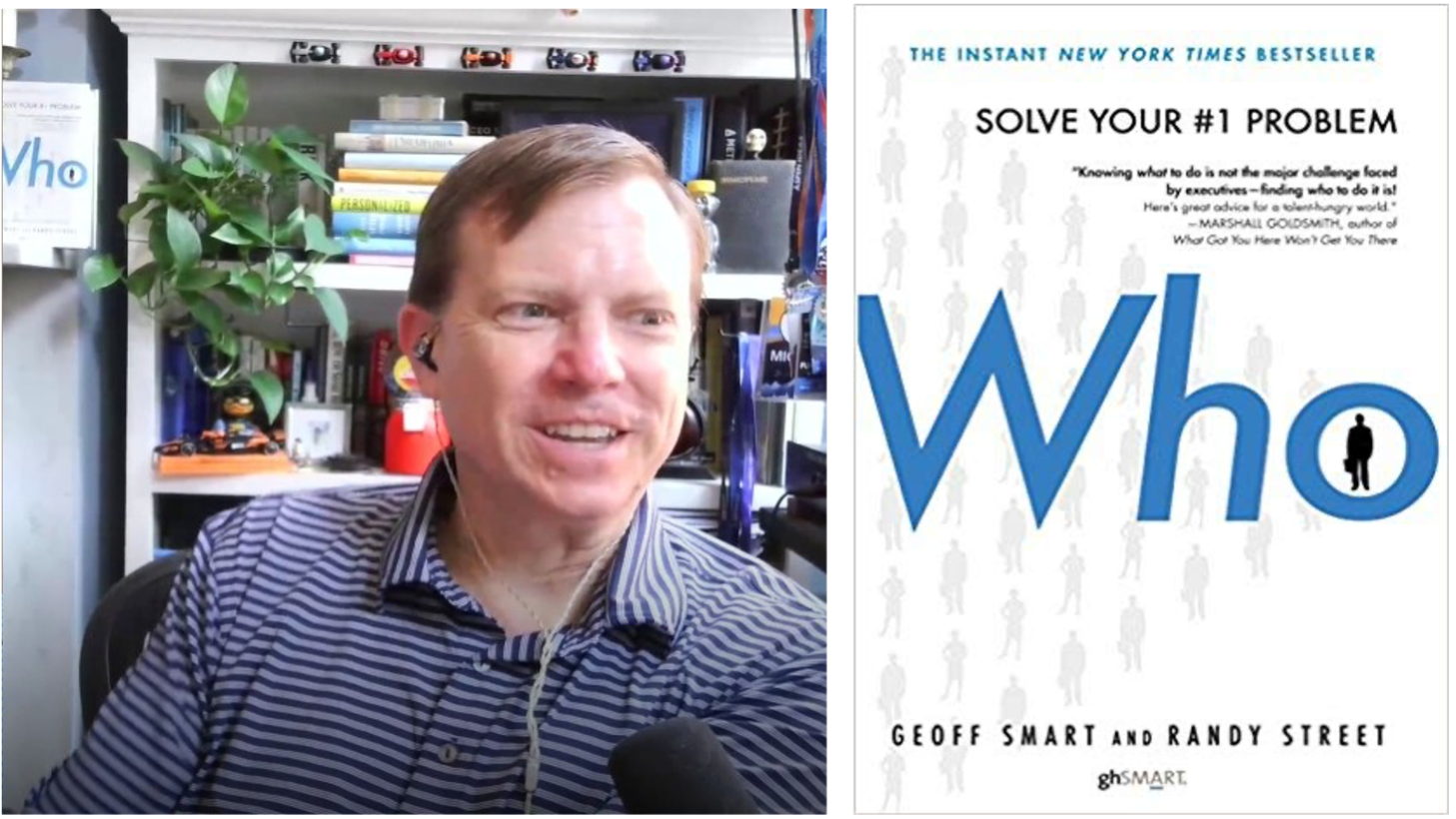
Michael Haugen, a leadership expert and long-time partner at GH Smart, has pioneered the Who Scorecard to assess executive teams. Having advised over 1000 startup teams, he shares his insights on attracting, assessing and inspiring startup talent. For the full discussion, see https://youtu.be/_bVsQoSL6kU.
The Power of Who
Michael Haugen's journey from chemical engineer to leadership expert illustrates the transition required for founders focusing on what needs to be done to who is doing it. As Haugen watched an industry leader falter due to management blunders, he realized that A teams can sometimes win with B plans, but B teams often squander an A plan.
The "power of who" refers to the importance of having the right people in the right roles. Effective leadership is not just about strategy but also about the talent executing that strategy. The Power of Who emphasizes that capable, effective teams are essential for executing any strategy successfully.
Leadership: The CEO and Executive Team
The stature of a company is the shadow cast by its leader. Yet leaders may not thrive in all seasons, and their success is often situation specific. Haugen observes that the requisite traits of effective leaders depend on the context in which they operate. An early-stage startup requires different leadership skills than an established corporation. Leadership skills also vary across industries and company cultures.
Effective leadership manifests itself through cohesive, capable executive teams and motivated, aligned company employees. Haugen asserts that CEOs should empower the team to manage daily operations and make only a few significant decisions per year. A capable team frees the CEO to focus on strategic direction, exploring new opportunities, forging key alliances and attracting top talent.
Haugen thus views executive team performance as a key indicator of effective leadership. A capable executive team reflects, complements and amplifies its leader. A cohesive team reinforces company culture and ensures that shared practices permeate across the organization.
Navigating Change
Flexibility and adaptability are essential for startups as only three of the thousand or more startups Haugen has advised have executed their plan exactly as they had initially envisioned. Startups must remain nimble with leaders ready to pivot quickly in response to customer feedback, technology shifts and changing market conditions. The ability to reassess and adjust based on market feedback is crucial for survival and growth during the early startup stages.
Haugen observes that experienced corporate executives rarely succeed as startup CEOs despite their extensive market experience, deep industry network and proven ability to lead large organizations. Corporate executives are unaccustomed to operating in lean startup environments and often lack the agility to adjust in rapidly changing, uncertain markets. Prior experience scaling startups is a better barometer for startup leadership than prior success at an incumbent firm.
Assessing Leadership: The Who Scorecard
Though talent is a prerequisite of startup success, Haugen asserts that only half of executive searches are successful. Failed searches are extremely costly. Startups not only lose money expended on executive turnover but also time, momentum and possibly reputation with a failed search.
GH Smart designed the Who Scorecard to improve the success rate of executive searches. Haugen has also found the scorecard is a useful tool in evaluating executive teams. The Who Scorecard prioritizes and calibrates the ideal characteristics of the executive a company seeks to recruit with requisite skills varying based on the role and needs of the company at that time. A strong promoter is vital for a sales executive, yet a chief financial officer requires a steadier hand. Leadership success in early-stage startups may not translate to the need to scale the business after a startup achieves product market fit.
Haugen emphasizes that management should agree on the key hiring criteria reflected in the Who Scorecard before the interview process begins. Otherwise, evaluations may devolve into varying views on the criteria rather than candidate capabilities relative to those criteria. Interviews may then be tailored to assess candidates according to the criteria outlined in the scorecard.
Haugen does detailed interviews with finalist candidates that may extend for half a day. Haugen believes the Who Scorecard and time invested for these deeper interviews may improve the success rate of executive searches by as much as fifty percent.
Conclusion
Understanding the power of who is crucial for company success. The discussion with Michael Haugen illustrates how the right team in the right market can transform a firm’s fortunes. Leaders must nonetheless adapt in dynamic markets. By prioritizing talent and embracing flexibility, organizations can thrive in highly competitive, rapidly changing conditions.